MMOT Mechanics & Modeling of Orthopaedic Tissues Lab Bucknell University · Mechanical Engineering

Understanding how soft tissues carry load from muscle fibers to whole joints.

Experimental and computational biomechanics research from the microscale to the whole body, carried out by Bucknell undergraduates.

See our research Students: join the lab

Research.

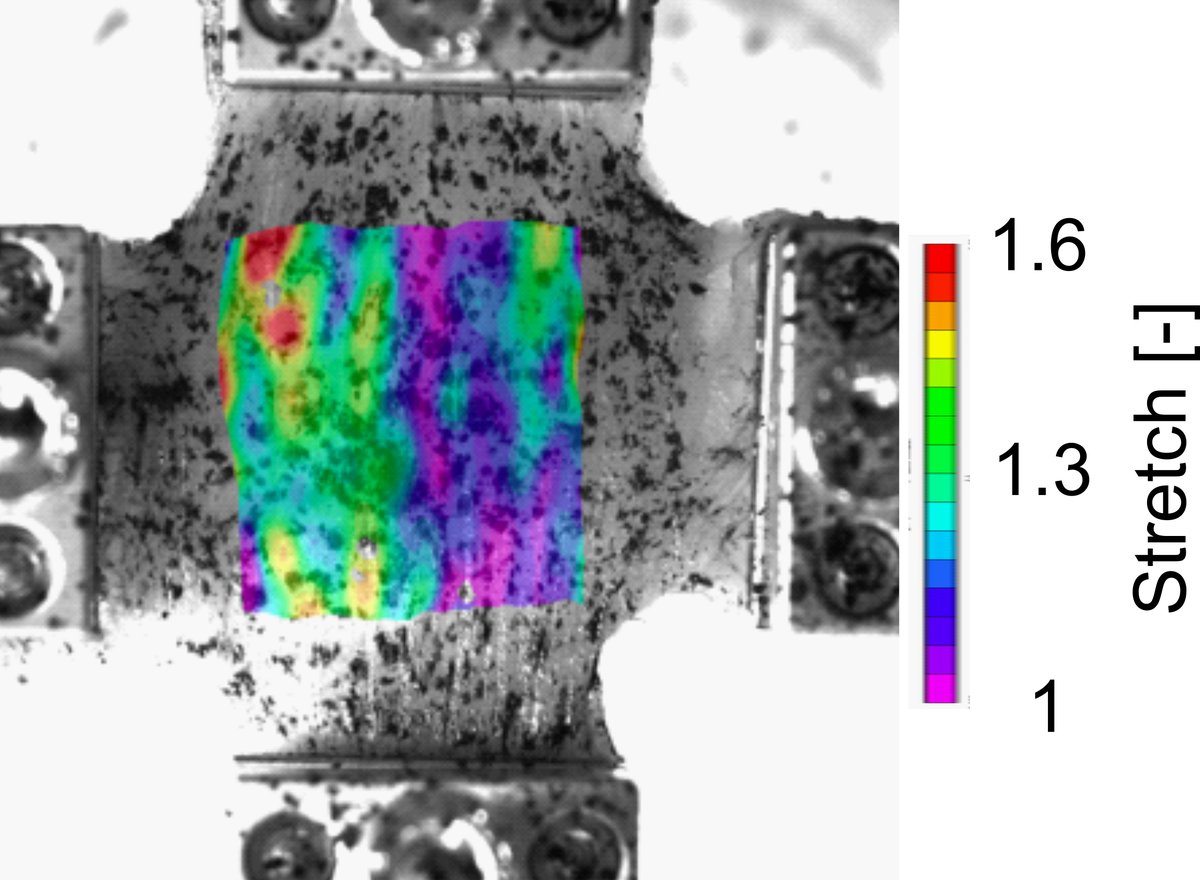
Muscle specimen under biaxial stretch, overlaid with a color map of local stretch from 1.0 to 1.6

Muscle

What are the mechanisms of muscle stiffness, and why are they important?

We determine how structure dictates mechanical properties.
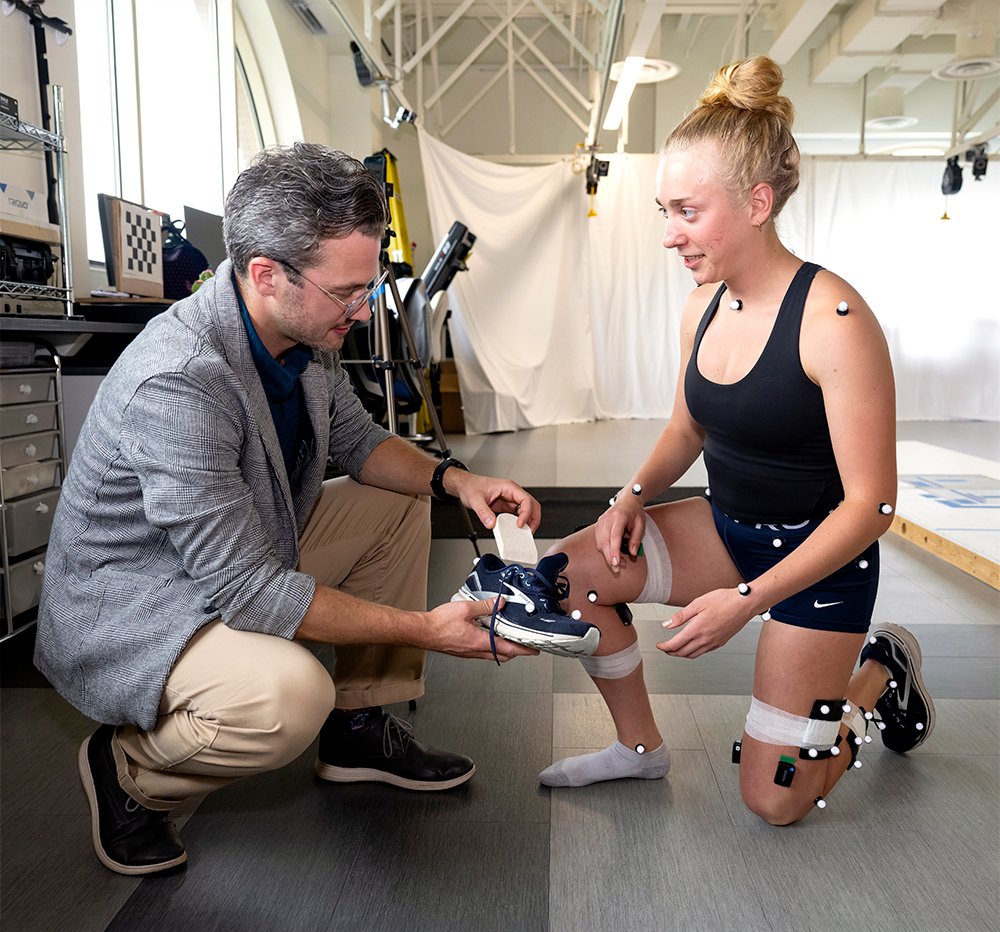
Prof. Wheatley fitting a shoe on a student wearing motion-capture markers in the lab

Movement

Why do some knees carry more load than others?

We use low-cost motion analysis tools and computational models to understand human motion, joint mechanics, and muscle fatigue.
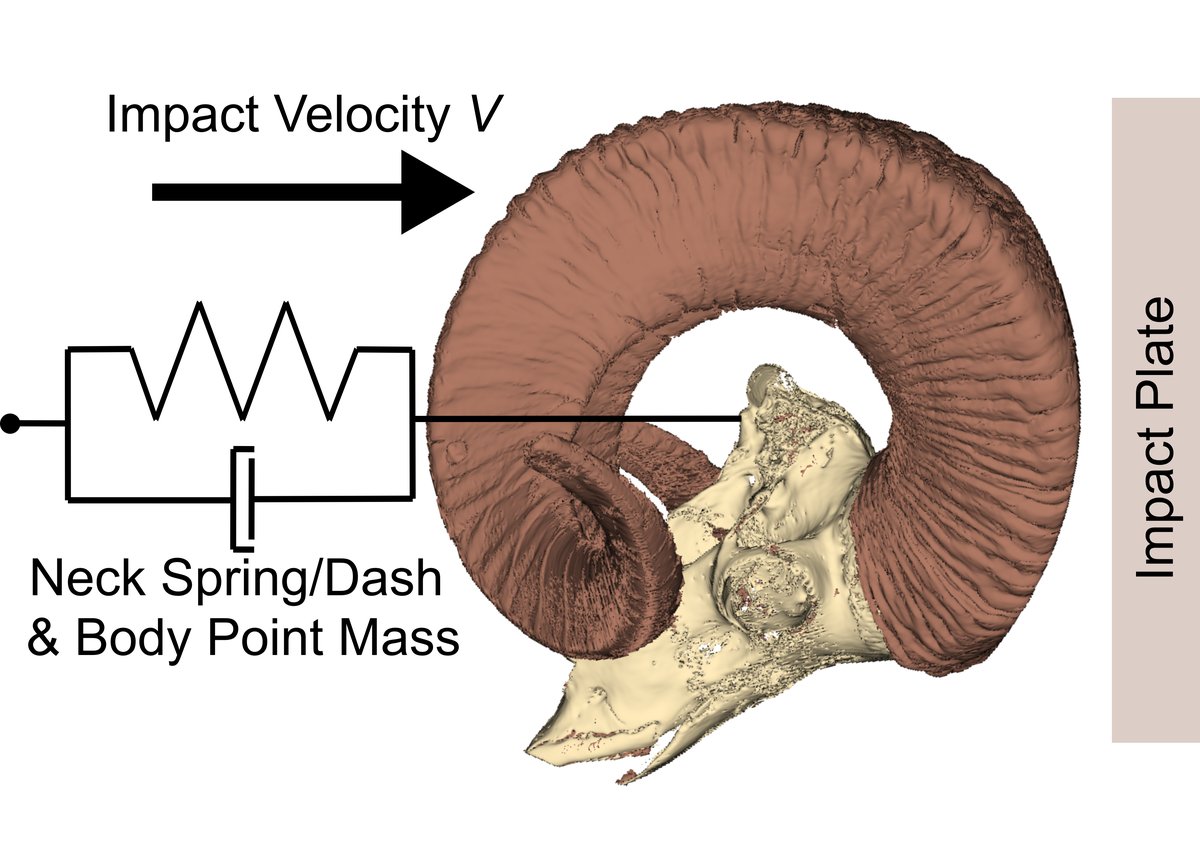
Model of a bighorn sheep skull and horn striking an impact plate, with a neck spring and damper

Bioinspired design

How do bighorn sheep protect their brains?

We study protective mechanisms in bighorn sheep skull and brains, with the goal of improving human safety.
The lab.

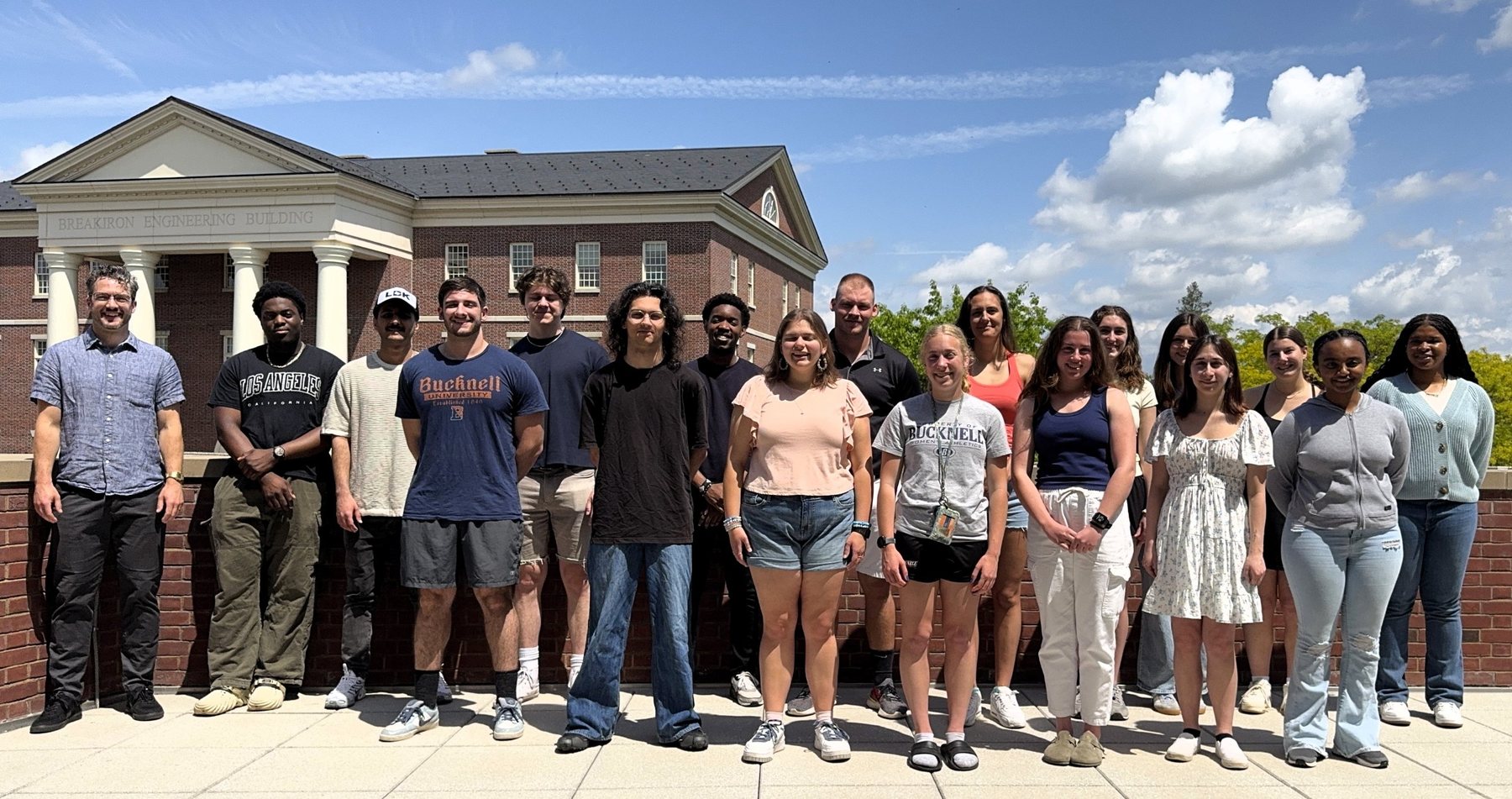
The MMOT Lab group standing outside the Breakiron Engineering Building
The MMOT Lab, spring 2025.
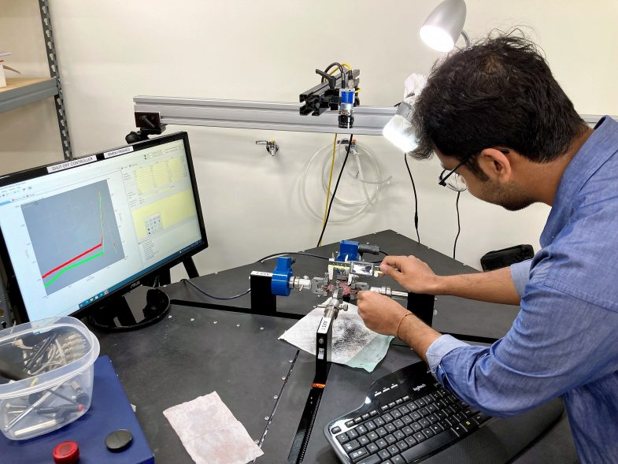
A student mounting a tissue sample on the biaxial tester
Biaxial testing
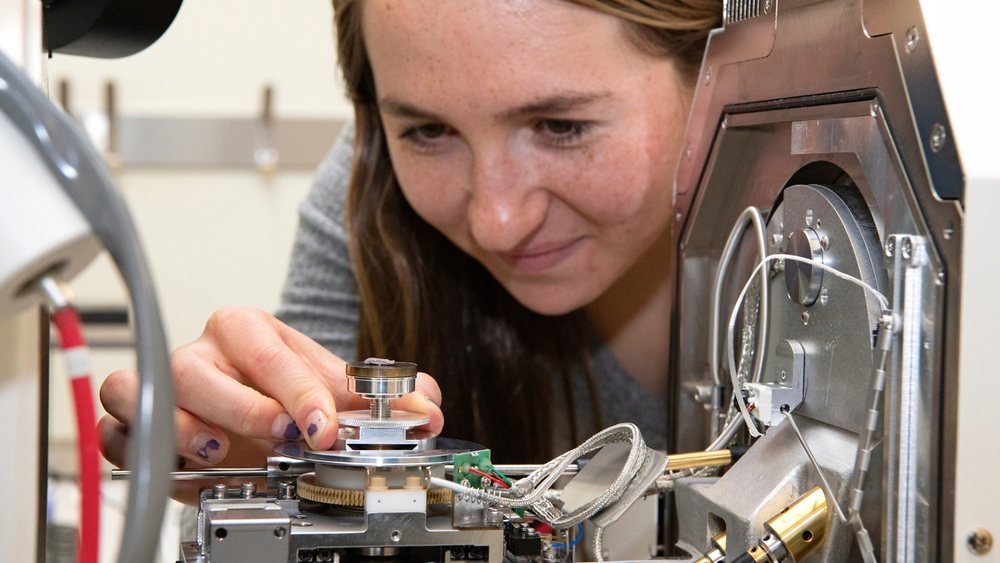
A student loading a sample into a scanning electron microscope
Scanning electron microscopy
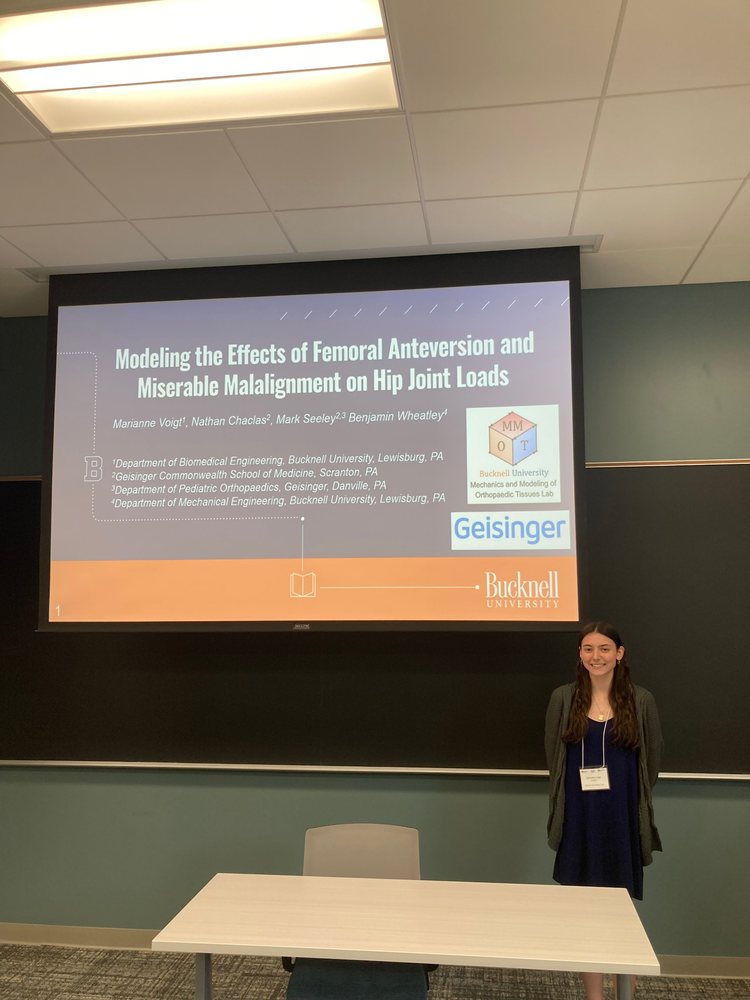
A student presenting her research at a conference
Presenting at a conference
The lab's summer softball team holding intramural champion shirts
Summer softball

Our mission

To foster individual growth through an interdisciplinary, inclusive, group-oriented culture that performs rigorous, student-led biomechanics research.

Our vision: to be the global leader in training undergraduate biomechanists.

Growth

We enable students to pursue their passions and embrace failure as part of the learning process. We believe curiosity, grit, and ownership are essential research skills, and prioritize these over technical aptitude. With individualized mentorship and strong peer support, we enable individual and scholarly growth.

Rigor

We externally disseminate biomechanics research, founded on rigorous experimental and computational methods. Successful research can take many forms; however our work is documented, ethical, repeatable, and clearly communicated to the biomechanics community.

Inclusion

We welcome students of all academic and technical ability levels. Interdisciplinarity is a core principle of our lab and a key contributor to our success, with students across colleges and departments at Bucknell. We cultivate an environment in which people with different backgrounds, identities, abilities, and perspectives can learn, contribute, and thrive.

Collaboration

We support one another through peer mentoring, open communication, constructive feedback, and shared resources. Learning about each other’s work and collaborating (internally and externally) promotes personal growth and improves the quality of our scholarship.

Current members and projects

  • Gianni ValentineMuscle fatigue during dynamic exercise
  • Celsey JohnsonMechanics of fluid pressurization in muscle
  • Bryce BernabeoDamage mechanics of aponeurosis tissue
  • Obianuju Obumneme-AkanemeImaging and modeling of 3D muscle tendon units
  • Kelsey BrennanLow-cost motion analysis wearable device design
  • Hannah RuohoniemiPassive knee stiffness device development
  • Aidan AlexanderMusculoskeletal modeling of the knee joint
  • Jaxon AxelmanImaging of aponeurosis microstructure

Where alumni go

Graduate school or medical school programs at Duke, MIT, the University of Washington, NYU, Boston University, the University of Delaware, Temple, and Colorado State.

Engineering careers at Northrop Grumman, Deloitte, Raymond Corp, the Department of Defense and more.

Three NSF Graduate Research Fellows.

Presentations.

Recent posters and talks from the lab, newest first.

WCB 2026Talk The Development and Implementation of a Computational Framework to Simulate Patellofemoral Joint MechanicsMahmood Rashedi, Mark A. Seeley, Brecca M.M. Gaffney, Benjamin B. Wheatley PDF ↓
WCB 2026Poster Variations in the Contribution of Fluid Pressurization to Compressive Muscle Stiffness: from Local to Global IndentationBenjamin B. Wheatley, Gianni A. Valentine, Pierre-Yves Rohan PDF ↓
ASB 2025Poster The Design of a Bioinspired Impact Mitigation System Towards the Prevention of Brain InjuriesBryce H. Reimer, Chiara M. Vessicchio, Benjamin B. Wheatley PDF ↓
ASB 2025Poster Comparing Torsional Gait Kinematics Between Marker-Based and Markerless Motion CaptureKailey M. Granger, Allyson K. Clarke, Mark A. Seeley, Benjamin B. Wheatley PDF ↓
ESB 2024Talk A Microstructural Finite Element Model of Passive Skeletal Muscle Validated Under Tension and CompressionBenjamin B. Wheatley, Kevin M. Moerman, Pierre-Yves Rohan PDF ↓
ESB 2024Poster Topological Data Analysis Improves Estimations of Muscle Fatigue from Surface Electromyography DataAllyson K. Clarke, Chulhyun Ahn, Benjamin B. Wheatley PDF ↓
ASB 2023Poster Effects of Static Exercises on Hip Muscle Fatiguability as Assessed by Surface ElectromyographyOlivia L. Dyer, Benjamin B. Wheatley, Mark A. Seeley PDF ↓
ASB 2023Talk Bioinspired Horn Shaped Oscillators for Mitigating the Effects of ImpactJake M. Schaefer, Aaron M. Drake, Benjamin B. Wheatley PDF ↓
ORS 2023Poster Aponeurosis Structure-Function Mechanisms: Evidence of Heterogeneity and Implications for Muscle FunctionBenjamin B. Wheatley, Olivia L. Dyer, Mark A. Seeley PDF ↓

Publications.

J. Neural Engineering, 2026 Topological data analysis improves estimation of muscle fatigue and contraction level from surface electromyography data
Acta Biomaterialia, 2025 A biphasic microstructural model of skeletal muscle to study structure–function mechanisms under multiaxial tensile and compressive conditions
Textbook, 2025 The Science and Engineering of Materials, 8th edition (with Askeland and Wright)

Google Scholar ↗

Ben Wheatley

Principal investigator

Ben Wheatley, PhD

Associate Professor of Mechanical Engineering

Director, Engineering EXCELerator Program

Muscle mechanics, modeling and undergraduate mentorship.

I founded the MMOT Lab at Bucknell in 2017. My students and I combine experiments and computational models to understand how muscles and joints carry load, and many of them go on to graduate school, medical school and engineering careers.

CV ↓Faculty profile ↗

Join the lab.

Curious about biomechanics? Bucknell students from any major are welcome. No research experience needed.

  1. 1

    See what we work on

    Browse recent student posters and talks to find a project that interests you.

    Browse presentations ↑
  2. 2

    Reach out

    Send Prof. Wheatley a short email with your major and class year and what draws you to the lab.

    b.wheatley@bucknell.edu

    Academic East 302 · Bucknell University · Lewisburg, PA